
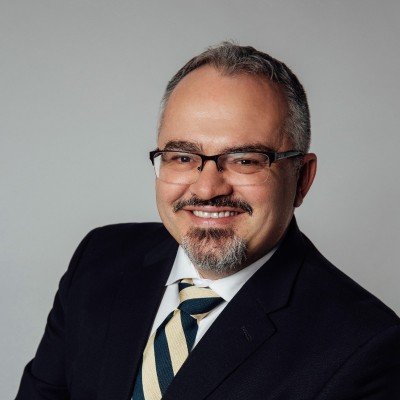
John Goci’s career shows a unique mix of technology, entrepreneurship, public service, and real estate skills. He started with work in properties, IT, and software development. Then he took on leadership roles in startups, investment, and government organizations. His career has been shaped by smart planning, careful execution, and flexibility. With over 25 years of hands-on experience in construction and real estate development, Goci has the technical knowledge to look beyond immediate value and focus on long-term potential. He believes in strong family and community values. His approach to leadership focuses on accountability, trust, and sustainable growth. In this interview, John Goci shares the lessons that have helped him move across different industries, how negotiation and public duty have improved his decision-making, and why making an impact—rather than just achieving success—guides his vision for the future.
Your professional path has spanned the IT, software development, startups, investment, public service, and real estate sectors. How did each phase prepare you for the next, and what lessons carried forward?
Across every industry I’ve worked in, the core fundamentals remain the same: develop a clear strategy, secure appropriate funding, and assemble the right team. Each phase of my career reinforced those principles in different ways. Technology and startups taught me agility and problem-solving; investment sharpened my risk assessment; public service emphasized accountability and impact; and real estate integrated all of those skills into execution. I’ve learned to view transitions not as endings, but as opportunities—when one door closes, another opens. That mindset has allowed me to continuously adapt and pursue new opportunities in an evolving business environment.
From an entrepreneurial background, what mindset shifts were required to scale from individual businesses to leadership in real estate?
Real estate offers virtually unlimited scalability, you can remain a solo practitioner or grow into a large organization. The key mindset shift is understanding that growth should align with both market conditions and personal leadership style. I’ve chosen to operate with a smaller, more focused team, because it allows for greater efficiency, accountability, and resilience during market cycles. In periods of low inventory and high interest rates, large teams create pressure to consistently generate volume for others’ livelihoods. A disciplined, right-sized structure allows for sustainable performance without unnecessary operational stress.
Your hands-on experience in construction allows you to look beyond face value. How has this technical expertise influenced your professional growth?

A solid understanding of construction fundamentally changes how you evaluate property. Knowing what goes into rehabbing or developing a building—costs, timelines, materials, and trade coordination—provides critical insight into feasibility, risk, and upside. This technical knowledge allows me to accurately assess a property’s true potential, forecast resale value, and advise clients with confidence. It transforms decisions from speculative to informed, and that has been a major advantage throughout my career.
You’ve held leadership roles in both public institutions and private enterprises. How does that level of responsibility shape decision-making and discipline?
Leadership in private enterprise typically involves a smaller decision-making group, allowing for speed and agility. Public institutions, by contrast, require navigating multiple stakeholders, regulatory processes, and public accountability. That environment demands patience, discipline, and a strong ethical compass. Managing responsibility at both levels has sharpened my ability to balance efficiency with transparency, and to make decisions that withstand scrutiny while still driving results.
Negotiation has been central to your career. How has that experience strengthened your ability to represent clients?
Negotiation is ultimately about perspective and alignment. Early in my career, I negotiated the first commercial use of music videos in the U.S. through a video jukebox platform, working with thousands of music publishers and record labels. That experience taught me to understand not only my client’s objectives, but also the motivations and constraints of the other party. Effective negotiation requires empathy, clarity, and advocacy—helping all sides understand the value exchange. The goal is not to “win,” but to reach a durable outcome where each party concedes strategically to achieve mutual benefit.
For many professionals in the diaspora, ambition is rooted in family and community values. How have these shaped your career and philosophy?
Immigrants often carry a deep responsibility to prove themselves while honoring the sacrifices made by their families. That sense of accountability instills discipline, resilience, and a strong work ethic. For me, success is inseparable from community responsibility. I believe in building long-term relationships and serving others—whether family, neighbors, or strangers—with the same care and integrity. When you operate by the principle of treating others as you would your own family, trust follows, and success becomes sustainable.
Looking ahead, what do you see professionally for yourself, and how do you envision the growth of your influence?
Looking forward, I’m deeply focused on how emerging technologies, particularly AI can be applied to healthcare, creative industries, and public impact. I’m currently revisiting a screenplay I wrote years ago about the Albanian national hero Skanderbeg, Athleta Christi, with plans to develop it into a graphic novel and potentially a major motion picture. Beyond creative work, I continue to consider opportunities in public service, as helping people has always been central to my purpose. Success is meaningful, but impact is lasting, contributing to greater freedom, opportunity, and quality of life is the highest goal I can pursue.